
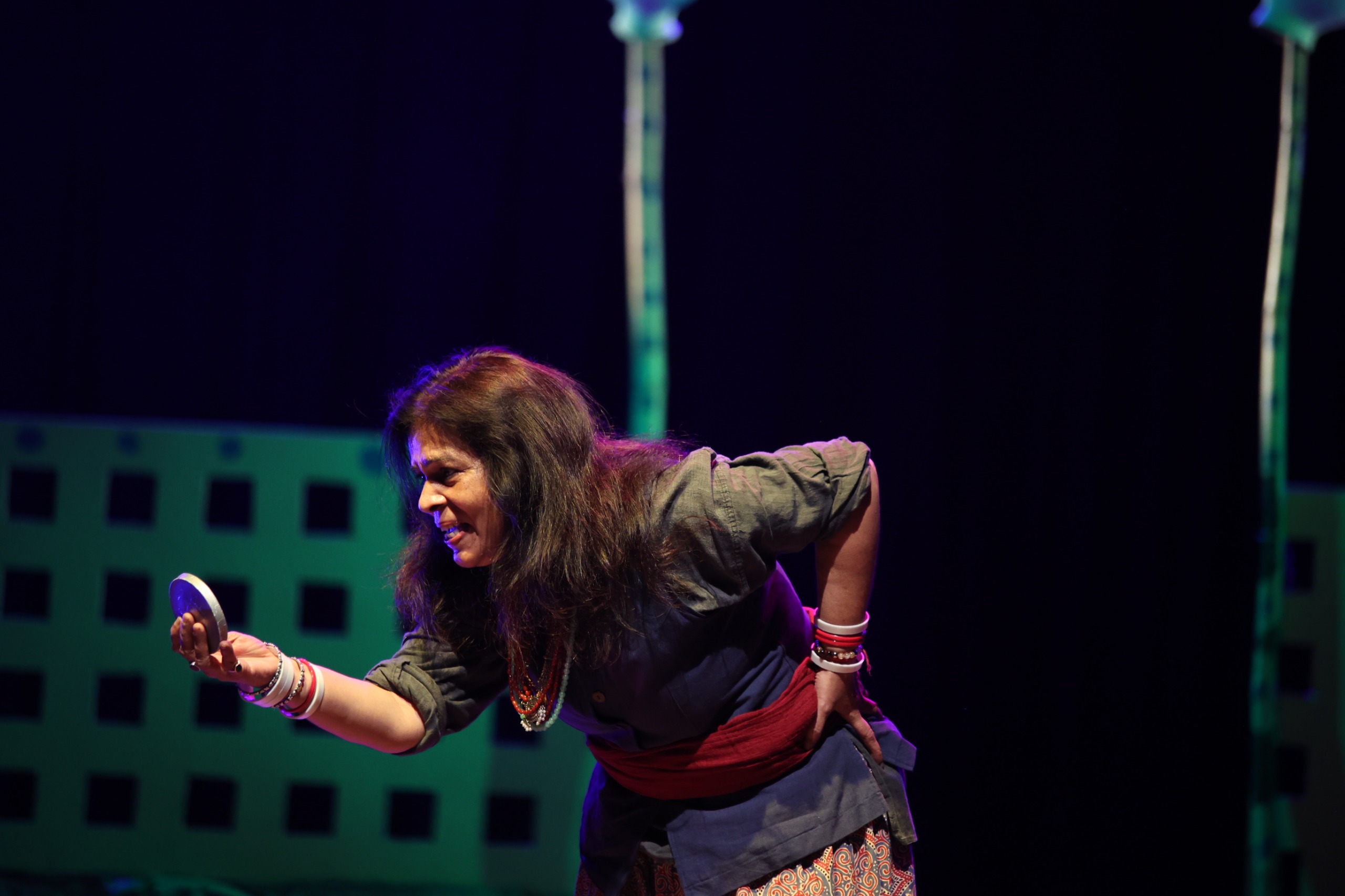
A Mesmeric Staging of “The Mirror” in Patna: A Profound Exploration of Human Psyche and Illusion
Rangam’s Hindi adaptation of a Japanese classic enthralls audiences at Premchand Rangshala under the aegis of the Ministry of Culture
Patna, Correspondent (Amar):
In an evening suffused with artistic brilliance and intellectual gravitas, the esteemed Patna-based theatre collective Rangam, with the gracious support of the Ministry of Culture, Government of India, a resplendent Hindi adaptation of celebrated Japanese playwright Chiyomi Hara’s timeless play “The Mirror” at the historic Premchand Rangshala, Rajendra Nagar.
The play, deftly translated into Hindi by Arun Chaturvedi and Tomio Mizokami, found evocative expression under the imaginative directorial stewardship of the young and accomplished theatre practitioner Raas Raj. The occasion was further dignified by the presence of distinguished luminaries from diverse fields, including noted litterateur Dhruv Kumar, social reformer and national awardee Kumari Vaishnavi, BJP Art Cell Varun Kumar, industrialist and philanthropist Sanjeet Prakash, veteran theatre artist Mithilesh Singh, social worker Rajesh Kumar, and eminent cardiologist Dr. P.K. Suman, among others.
The ceremonial inauguration commenced with the traditional lighting of the lamp, symbolizing the triumph of knowledge and creativity, in the presence of an erudite gathering of theatre connoisseurs, critics, and cultural aficionados.

A Narrative Steeped in Irony and Psychological Depth
Set against a quaint mountainous backdrop, “The Mirror” unfolds as a deceptively simple yet profoundly layered narrative revolving around an ingenuous rural family Yasuke (the father), Matsu (the mother), Yoichi (the son), and Sode (the daughter) who remain blissfully unacquainted with the concept of a mirror.
The dramatic fulcrum emerges when Yasuke returns from a sojourn in the city bearing gifts, including a small pocket mirror which he misconstrues as a mystical artefact. Upon glimpsing his own reflection, he becomes convinced that the image encapsulates the spirit of his deceased father. What ensues is a poignant interplay of emotion, as he converses with, confides in, and clings to the illusion.
The intrigue deepens as each family member clandestinely engages with the mirror, projecting their subconscious desires and insecurities upon it. The daughter perceives a charming urban confidante; the son discerns a robust hunter, fuelling his aspirations of venturing into the wider world; while the mother, confronted with her own ageing visage, tragically interprets it as the presence of a rival woman thereby igniting suspicion and emotional turbulence within the household.
Thus, a single object becomes the catalyst for a maelstrom of jealousy, and fractured trust, bringing the once-harmonious family to the brink of disintegration.
Director’s Vision: A Philosophical Inquiry
Articulating his interpretative vision, director Raas Raj remarked, “This play transcends the realm of mere comedy or domestic discord. It is, in essence, a philosophical and psychological exploration of the human condition. The mirror does not merely reflect appearances; it reveals the latent anxieties, unfulfilled desires, and emotional solitude that reside within us. We do not perceive the world as it is, but as we are.”
Compelling Performances and Technical Excellence
The production was bolstered by compelling performances from Krishna Kinchit (Yasuke), Renu Sinha (Matsu), Pooja Gupta (Sode), Shivam Kumar (Yoichi), with Raas Raj himself portraying the hunter.
Behind the scenes, the production exhibited remarkable finesse: narration by Deepak Anand, lighting design by Rajeev Roy, music composition by Nihal Kumar Dutta, costume design by Pinku Raj, and stage construction by Sunil Sharma contributed to an immersive theatrical experience. Visual documentation was adeptly handled by Parminder Singh Sangha and Manish Kumar.
Acknowledgements and Reception
The organisers extended their heartfelt gratitude to the Ministry of Culture, NCZCC Prayagraj, Prayas Rang Adda Patna, and other collaborators and patrons for their invaluable support.
The performance culminated in an enthusiastic response from the audience, who lauded the play as both intellectually stimulating and deeply entertaining a rare confluence of humour and philosophical introspection.